15 June Week Ahead: Oil Eases as a US-Iran Deal Nears
Monday 15 June 2026
Global markets showed heightened volatility at the start of the week, with commodities and equities reacting to escalating tensions in the Middle East and renewed trade threats from US President Donald Trump.
Investors tracked movements in gold, oil price, and major indices as uncertainty weighed on sentiment.
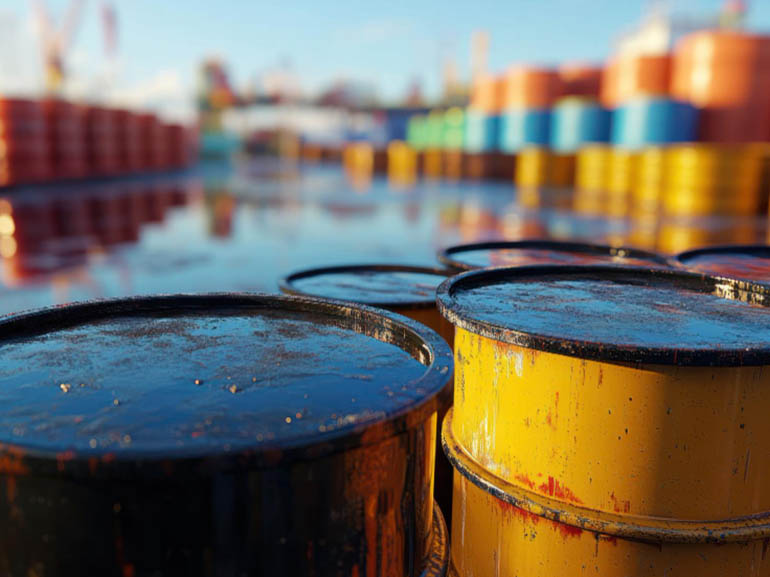
Markets remain volatile amid escalating Middle East tensions
Gold prices decline despite ongoing inflation concerns
Oil and gasoline prices fluctuate on supply risks
US indices extend losses during a multi-week downturn
Trump’s trade threats add further uncertainty to global markets
Traders may want to monitor this week's economic and earnings reports for global economy health
Gold prices extended losses on Sunday (22 March 2026) night, retreating despite persistent inflation concerns, as a broad market sell-off pressured the precious metal.
Analysts described the move as a sharp positioning reset amid rising inflation worries and shifting rate expectations. (Source: Yahoo Finance)
In energy markets, oil prices fluctuated on Sunday amid geopolitical uncertainty linked to the Middle East and concerns surrounding a key shipping route. Market participants reacted to strong rhetoric tied to the Strait of Hormuz, a critical artery for global crude supply.
Meanwhile, gasoline prices mirrored volatility in crude markets, with price swings driven by supply concerns and geopolitical developments affecting energy flows.
In early trading this Monday, equity markets were under pressure, continuing a multi-week downturn.
Futures linked to the S&P 500, Nasdaq 100, and Dow Jones Industrial Average all trended lower.
This general "risk-off" sentiment reflected the combined impact of geopolitical and macroeconomic uncertainties.
The broader economic implications of the ongoing tensions are becoming more pronounced, with energy markets at the centre of global risk.
Oil prices have risen above $100 per barrel in recent sessions, while gas prices in some regions have surged, intensifying inflationary pressures across major economies.
Disruptions to the Strait of Hormuz, through which roughly one-fifth of global oil supply passes, have raised concerns about supply chain instability, affecting not only energy but also key industrial inputs such as chemicals and fertilisers. These developments have increased costs for businesses and could weigh on global growth if prolonged.
Economists cited in the report noted that sustained energy price increases could complicate central bank policy, as rising inflation may limit the scope for rate cuts while economic activity slows. The situation highlights the vulnerability of global supply chains to geopolitical disruptions.
Investor sentiment was further impacted by renewed threats from Donald Trump related to trade measures targeting Iran, raising concerns over broader economic implications and global trade stability.
Separately, traders prepared for increased volatility at market open, with expectations of sharp price swings across asset classes amid the evolving geopolitical backdrop and policy-related rhetoric.
Besides the developments in the Middle East, traders may want to keep tabs on the following this week:
Eurozone, Germany, France, and UK Purchasing Managers’ Index (PMI)
Japan National Consumer Price Index (CPI)
GameStop earnings
Australia CPI
UK CPI
US Initial Jobless Claims
Spain CPI
Carnival earnings
Overall, global markets remain sensitive to geopolitical developments and policy signals, with gold under pressure, oil and gasoline prices fluctuating, and equities facing continued downside pressure. Investors continue to monitor these developments closely as uncertainty persists.
*Past performance does not reflect future results. The above is for marketing and general informational purposes only, and are only projections and should not be taken as investment research, investment advice or a personal recommendation.
Gold declined due to a broad market sell-off and repositioning by investors, even as inflation concerns remain elevated.
Oil prices are fluctuating due to geopolitical tensions in the Middle East and concerns over supply routes such as the Strait of Hormuz.
Major US indices, including the S&P 500 and NASDAQ, have been trending lower amid ongoing uncertainty and risk-off sentiment.
Trump’s renewed trade threats targeting Iran have added uncertainty to global markets, influencing investor sentiment and risk appetite.



Learn insights through informative videos, webinars, articles, and guides with our comprehensive Trading Academy.
Discover what’s trending in and outside of Plus500.
This information is written by Plus500 Ltd. The information is provided for general purposes only, and does not take into account any personal circumstances or objectives. Before acting on this material, you should consider whether it is suitable for your particular circumstances and, if necessary, seek professional advice. No representation or warranty is given as to the accuracy or completeness of this information. It does not constitute financial, investment or other advice on which you can rely. Any references to past performance, historical returns, future projections, and statistical forecasts are no guarantee of future returns or future performance. Plus500 will not be held responsible for any use that may be made of this information and for any consequences that may result from such use. Hence, any person acting based on this information does so at their own discretion. The information has not been prepared in accordance with legal requirements designed to promote the independence of investment research.
Cryptocurrency CFDs are not available to Retail Clients.