04 May Week Ahead: April NFP, Fed Split & a Hormuz Oil Shock
Monday 04 May 2026

Both WTI (CL) and Brent (EB) crude oils rose over 2% on Tuesday, 6 May, as Chinese traders returned following a 5-day holiday. WTI rose to $58.39 per barrel and Brent to $61.54 by 07:55 GMT after reaching a 4-year low on Monday, 5 May, after OPEC+’s decision to ramp up production hikes.
At China’s reopening on Tuesday, the country reported 314 million domestic trips during the Labour Day holidays, an increase of 6.4% year over year. As a result, prices nearly reversed all OPEC-led losses witnessed on Monday following a surprise decision last Saturday to triple oil production volumes.
However, oil has lost over 20% since US President Donald Trump's tariffs took effect in April. As such, some analysts believe today’s move was simply technical rather than fundamental, especially following OPEC+'s hike.
Notably, OPEC+ brought its Monday meeting forward after Trump threatened to sanction countries that continue to buy Iranian oil, opening an opportunity to gain market share in China.

OPEC+ surprised markets by meeting earlier than scheduled and reducing its oil production quota by 411,000 barrels per day for June. The increase for April and May amounted to 960,000 bpd, 44% of the 2.2 million bpd announced after the pandemic.
The decision from the group led by Saudi Arabia follows another increase in May. With this rise, it now stands at nearly three times the volume initially OPEC+ decided to release into the markets. The next July meeting is due in June, with most of the group’s producers shifting the decision gears to a monthly frequency.
The cartel said that one of the primary reasons for the decision was the increase in production from Iraq and Kazakhstan, both of which have exceeded caps and gained more market revenue. Another issue OPEC+ surfaced was US oil production, with big producers Saudi Arabia, UAE, Kuwait and Russia all claiming they could have produced more oil but “are holding back.”
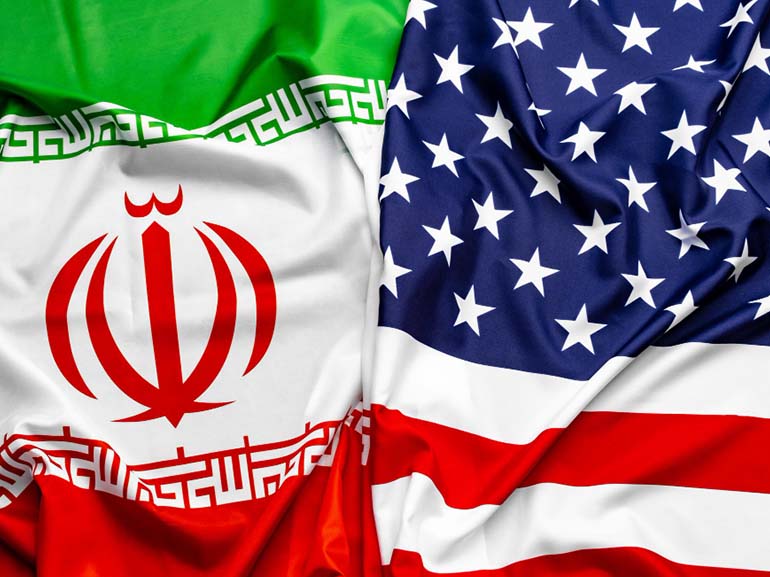
However, the announcement follows Trump-Iran tensions. (Source: Investors.com)
Last week, Trump announced on social media in an effort to gain an upper hand in negotiations with Iran that countries buying oil from Iran would face sanctions. Iran is the biggest exporter of oil to China, with Trump hitting two birds with one stone just before he visits Saudi Arabia on 12 May and joins a Persian Gulf summit on 14 May.
However, some have started to link the dots between Trump’s oil strategy, presuming that Saudi Arabia will take the opportunity to sell more oil. At the same time, Russia will be put in a position of weakness. For context, back in 2020, Russia and Saudi Arabia went on a price war after the former refused larger oil production cuts. It led Saudis to retaliate by opening the oil supply taps, which resulted in oil prices crashing around 70% and WTI into negative territory. Trump has openly urged Saudis at Davos in January to lower prices following his inauguration, citing a faster end to the Ukraine war.
The US President revisited the issue on Monday, stating that lower oil prices place the US in a good position to negotiate the Ukraine war with Russia. Trump had previously noted that lower oil prices would hurt Russia’s profitability and eventually lead to underfunding its war. However, lower prices are affecting cash flows of not only Russia, but also OPEC and US oil producers.
Following the weekend surprise announcement by OPEC+, Goldman Sachs (GS) slashed its Brent and WTI forecasts for 2025 to $60 and $56 per barrel from $63 and $59, with projections for 2025 down to $56 and $52 from $58 and $55. Analysts suspect that faster hikes by OPEC will move forward the expected oil surpluses.
Morgan Stanley (MS) also revised down its Brent price forecast for Q3 and Q4 to $62.50 per barrel from $67.50 before, expecting the supply glut to increase up to 1.1 million barrels per day (bpd).
Yet, given the drivers weighing on the price of oil and earnings from oil companies, RBC Capital Markets analysts eye the $50 per barrel mark. Demand remains gloomy to offset the supply as OPEC members overproduce, as the cartel is looking to regain market share from the US. Demand was flat in April year-on-year as economies face pressure from President Trump’s tariffs.
Although much depends on tariffs, progress on this front is unlikely to lead to notable changes in energy unless US oil producers capitulate. Only a couple of oil majors have announced reductions in capital spending. In fact, many oil companies are expected to face further downside due to low oil prices impacting their profitability.
The crude oil rebound on Tuesday offered markets a breather as Chinese consumption provided temporary support in the immediate aftermath of OPEC+'s aggressive pivot toward market share.
With Trump leveraging energy as a diplomatic tool ahead of his Middle East visits and analysts revising forecasts downward, investors face a market driven by politics rather than fundamentals, suggesting continued volatility regardless of short-term price movements.
*Past performance does not guarantee future results




Learn insights through informative videos, webinars, articles, and guides with our comprehensive Trading Academy.
Discover what’s trending in and outside of Plus500.
This information is written by Plus500 Ltd. The information is provided for general purposes only, and does not take into account any personal circumstances or objectives. Before acting on this material, you should consider whether it is suitable for your particular circumstances and, if necessary, seek professional advice. No representation or warranty is given as to the accuracy or completeness of this information. It does not constitute financial, investment or other advice on which you can rely. Any references to past performance, historical returns, future projections, and statistical forecasts are no guarantee of future returns or future performance. Plus500 will not be held responsible for any use that may be made of this information and for any consequences that may result from such use. Hence, any person acting based on this information does so at their own discretion. The information has not been prepared in accordance with legal requirements designed to promote the independence of investment research.
Cryptocurrency CFDs are not available to Retail Clients.