SpaceX Rebounds as Nasdaq 100, S&P 500 & Nikkei 225 Decline
Wednesday 24 June 2026

Brent crude closed Friday, 26 June 2026, at $71.99 a barrel, the lowest since 27 February and down more than 10% on the week, as oil exports through the Strait of Hormuz recovered toward roughly 75% of pre-war levels. WTI settled at $69.23, back below $70 for the first time since late February. Then, the picture changed. Over the weekend the US struck Iranian military targets on Friday and Saturday after fresh attacks on shipping near the strait, and Iran fired missiles and drones at US sites in Kuwait and Bahrain on Sunday. The two sides have since agreed to halt strikes for now ahead of this week's talks, and oil edged higher in early Monday trade.
The same fall in energy prices that has eased the case for further central bank tightening now sits against a ceasefire that is visibly two-way. Here's what traders may want to know about the uncertain week ahead:

Brent neared $72 and WTI fell below $70 on Friday, the lowest since late February, before weekend US-Iran strikes pushed prices higher on Monday. A fragile pause is now in place ahead of talks in Doha on Tuesday.
US May CPI rose to 4.2% year-on-year and PCE to 4.1%, both multi-year highs, driven mainly by the energy shock.
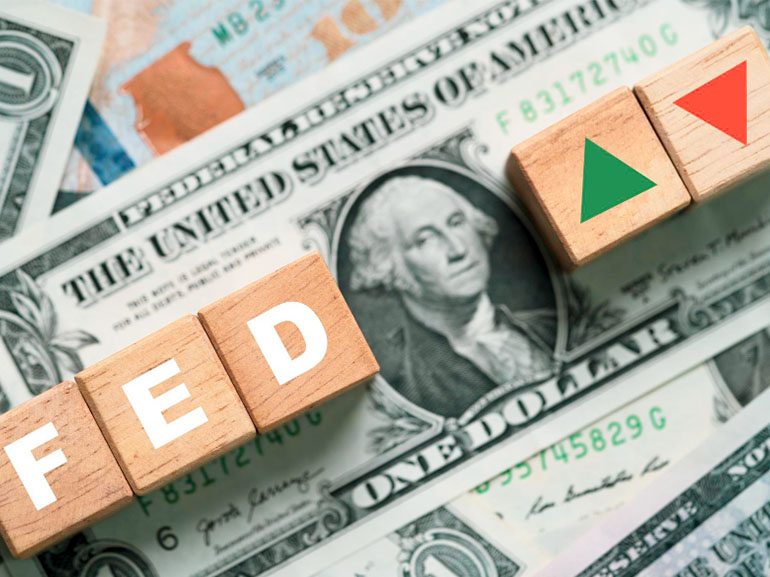
The Federal Reserve, now chaired by Kevin Warsh, held rates at 3.5% to 3.75% in June with a hawkish dot plot, and markets price a possible September hike.
The ECB raised rates 25 basis points in June, and its policymakers gather at the annual Sintra forum, which runs 29 June to 1 July.
Diary: ISM manufacturing and euro-area flash inflation on Wednesday, US June payrolls on Thursday.
Cross-asset: gold fell for a fourth straight week, the dollar held firm, and Wall Street eased on an AI-driven sell-off separate from the oil story.
The relief in oil prices came from the waterway at the centre of the conflict. Vessel traffic through the Strait of Hormuz, the route that normally carries about a fifth of the world's seaborne oil, had recovered as a US-supported corridor near Oman reopened and Gulf exports climbed back toward about 75% of pre-war levels, according to tanker-tracking data, with Saudi Arabia loading tankers again at its Ras Tanura terminal. The conflict, which began on 28 February 2026 with joint US and Israeli strikes on Iran, had removed about 7.88 million barrels per day from OPEC supply at its peak, cutting the group's output by 27% in March. With Brent now back near where it traded the day before the war, after climbing above $100 at the height of the disruption, the conflict premium has effectively unwound, leaving the next move largely a question of whether Hormuz stays open. (Source: CNBC)
That recovery stalled over the weekend. After a drone hit on the container ship Ever Lovely off Oman on Thursday, the US struck Iranian targets on Friday and hit ten more military sites late on Saturday, after Iran attacked the Kiku, a tanker carrying crude for Qatar. Iran's Revolutionary Guard said it fired missiles and drones at US facilities in Kuwait and Bahrain on Sunday, with no US casualties reported. A United Nations maritime agency paused moving stranded vessels through the Omani corridor, and tracking firm Windward said the pace of normalisation had slowed. Both sides have since stood down for now, with vessels able to move freely, and they meet in Doha on Tuesday in a test of whether flows keep recovering.
The oil story matters because energy has been the main driver of this year's inflation. US consumer prices rose 4.2% in the year to May, the highest since April 2023, with the Bureau of Labor Statistics noting that energy accounted for over 60% of the monthly increase. The Federal Reserve's preferred gauge, the PCE price index, rose 4.1% over the same period, a three-year high. Core CPI, which strips out food and energy, was softer at 2.9%, a sign that the pressure has been concentrated in fuel rather than broad-based.
That mix has reset rate expectations. At its June meeting, the first under new Chair Kevin Warsh, the Fed held its target at 3.5% to 3.75% but published a hawkish set of projections, with about half of officials seeing at least one increase in 2026. After Thursday 's in-line PCE, markets priced roughly a 60% chance of a hike in September and a higher probability by December, according to CME Group's FedWatch tool. Lower fuel costs feed the same channel in Europe, where the ECB raised its three key rates by 25 basis points in June and euro-area inflation ran at 3.2% in May.
It is a holiday-shortened week in the US, with markets closed for Independence Day, observed on Friday 3 July. The diary is dense before then:
Tuesday, 30 June:
US and Iranian officials meet in Doha to discuss Strait of Hormuz shipping, the most immediate driver of the oil price.
Wednesday, 1 July:
The ISM manufacturing PMI, with its prices-paid component watched for input-cost pressure. The May reading was 54.0.
Euro-area flash inflation for June, after a 3.2% reading in May.
Thursday, 2 July:
US June payrolls, brought forward from Friday because of the holiday. May payrolls rose 172,000 with unemployment at 4.3%.
Through the week:
The ECB Forum at Sintra, where central bank leaders speak from 29 June to 1 July, and any OPEC commentary on Iraq's quota dispute.
The EIA Weekly Petroleum Status Report, alongside tanker-tracking data on Hormuz transit volumes.
While past performance does not reflect future results, Gold seems to have behaved unusually for a period of conflict. Rather than rising as a traditional safe-haven asset, it fell for a fourth consecutive week, settling near $4,070 on Friday after a modest bounce, as a firm dollar and the Fed's hawkish stance outweighed geopolitical demand. The US Dollar Index held near recent highs around 101, having firmed after the June meeting.
Equities told a separate story. Wall Street eased on an AI and chip-driven sell-off rather than anything in the oil market: the Nasdaq 100 fell 4.6% on the week, the S&P 500 closed Friday at 7,354, down about 2% on the week, and Germany's DAX 40 settled at 24,671, down about 1.3%, with names tied to artificial intelligence spending under pressure. For GCC-based traders, the price path also matters at home, since Gulf energy revenues and listed producers are sensitive to oil, and the UAE's exit from OPEC and OPEC+ on 1 May 2026 has added a new variable to regional supply.
The week ahead turns on a question that markets cannot yet answer: whether the weekend's pause holds and Hormuz shipping keeps normalising, or whether the truce frays again. Either way, the data calendar will show how far the energy shock has fed into inflation, and how central banks on both sides of the Atlantic read it. For now, the de-escalation is real but unfinished, and the price action reflects it.
*Past performance does not guarantee future results. The above is for marketing and general informational purposes only, and are only projections and should not be taken as investment research, investment advice or a personal recommendation.
Brent closed Friday near $72 a barrel and WTI below $70, the lowest since late February, as Strait of Hormuz traffic recovered. Prices edged higher again on Monday after weekend US-Iran strikes.
Energy has been the main driver of the 2026 inflation rise. US CPI reached 4.2% in May, with energy accounting for over 60% of the monthly gain, so a sustained fall in oil could ease headline inflation.
The Fed held rates at 3.5% to 3.75% in June under new Chair Kevin Warsh and signalled a hawkish bias. Markets price roughly a 60% chance of a September hike.
A firm dollar and the Fed's hawkish stance outweighed safe-haven demand, leaving gold lower for a fourth straight week near $4,070.
ISM manufacturing and euro-area flash inflation on Wednesday, and US June payrolls on Thursday, in a week shortened by the US Independence Day holiday.
Traders may watch Hormuz transit volumes, the Doha talks on Tuesday, and any fresh incident near the strait, since flow data has tended to lead the price.




Learn insights through informative videos, webinars, articles, and guides with our comprehensive Trading Academy.
Discover what’s trending in and outside of Plus500.
This information is written by Plus500 Ltd. The information is provided for general purposes only, and does not take into account any personal circumstances or objectives. Before acting on this material, you should consider whether it is suitable for your particular circumstances and, if necessary, seek professional advice. No representation or warranty is given as to the accuracy or completeness of this information. It does not constitute financial, investment or other advice on which you can rely. Any references to past performance, historical returns, future projections, and statistical forecasts are no guarantee of future returns or future performance. Plus500 will not be held responsible for any use that may be made of this information and for any consequences that may result from such use. Hence, any person acting based on this information does so at their own discretion. The information has not been prepared in accordance with legal requirements designed to promote the independence of investment research.
Cryptocurrency CFDs are not available to Retail Clients.