Swiss National Bank: Switzerland's Independent Central Bank and Guardian of Price Stability
Wednesday 17 June 2026
Oil prices eased modestly on Thursday after a strong rally earlier in the week, as investors reassessed geopolitical risks from ongoing U.S.-Iran tensions and potential impacts on energy markets and U.S. indices. Markets are balancing heightened military activity in the Gulf with signs of limited diplomatic progress in talks between the United States and Iran.
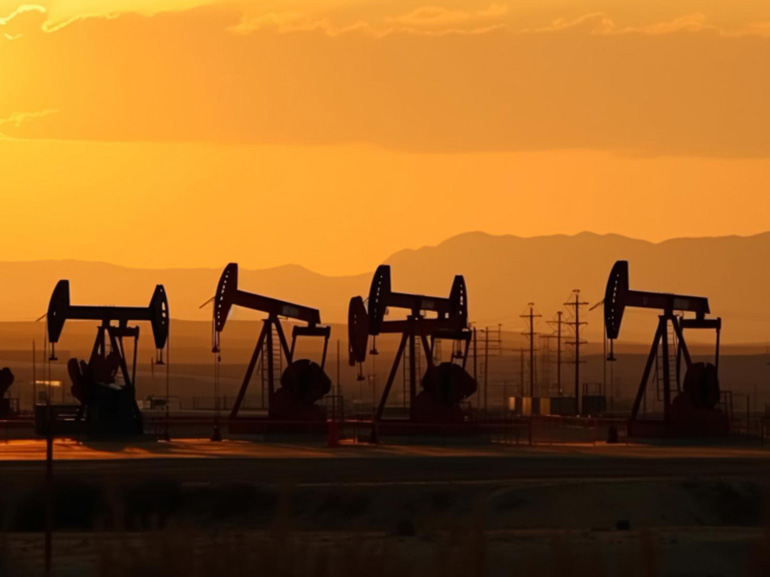
Oil prices eased after a rally as investors reassessed U.S.-Iran tensions and limited diplomatic progress.
Natural gas and LNG markets remain sensitive due to strategic Middle East supply routes.
U.S. equity indices have shown mixed but resilient performance amid geopolitical and macroeconomic influences.
The market remains alert; further escalation could tighten energy markets and press risk assets.
On Wednesday, oil prices softened after earlier gains, reflecting investor caution amid ongoing U.S.-Iran discussions without a clear breakthrough. Brent crude futures dipped to about $70.23 a barrel, and U.S. West Texas Intermediate (WTI) traded around $65.11, easing slightly from a more than 4% rise the previous day, when traders priced in a greater risk of Middle East supply disruption.
Despite recent pullbacks, oil remains sensitive to geopolitical developments. Analysts note that oil nearing or above $70 could reflect a “fear-driven breakout” tied to potential conflict escalation, although limited diplomatic progress in Geneva has tempered some risk premiums.
Natural gas markets also face risk from regional tensions. The Middle East plays a key role in liquefied natural gas (LNG) flows, and any disruption, particularly in the Strait of Hormuz, which handles nearly 20 % of global oil shipments, could ripple into broader energy pricing.
At the same time, broader crude markets have wrestled with a global surplus in recent months. A significant volume of sanctioned crude from Iran, Russia and Venezuela remains offshore, which has limited downward pressure on prices even amid bearish fundamentals. (Source: Market Watch)
Financial markets have shown mixed reactions to the geopolitical backdrop recently. On Wednesday, major U.S. indices climbed on optimism around the tech sector and corporate news, even as geopolitical uncertainty persisted. For example, the S&P 500 rose around 0.6 %, the Nasdaq gained about 0.8 %, and the Dow Jones Industrial Average added roughly 0.3 %, partly on strong earnings and risk-on sentiment in equities.
However, geopolitical stress tends to increase market volatility and can boost demand for safe-haven assets such as precious metals and volatility-linked instruments. While gold and silver have drawn support from such flows, firm U.S. dollar strength and mixed macro signals have limited their gains.
The current risk environment reflects both heightened military deployments by the U.S. and Iranian forces and continued diplomatic engagements. Talks in Geneva between Washington and Tehran have shown some movement on procedural engagement, but core differences remain unresolved, keeping markets on alert.
Investors continue to monitor pronouncements from senior officials on both sides, and the broader strategic importance of Gulf shipping lanes, particularly the Strait of Hormuz, remains a focal point in assessing potential supply chain disruptions if tensions escalate further.
In summary, U.S.-Iran tensions continue to influence global energy markets and risk sentiment across financial assets. Oil and natural gas prices remain volatile as traders balance fear-driven premiums with diplomatic signals, while U.S. stock indices have so far shown resilience supported by strong sectors and economic data. Markets may react to any significant escalation or de-escalation, with the strategic context of energy supply routes such as the Strait of Hormuz a key factor in future pricing dynamics.
*Past performance does not reflect future results. The above is for marketing and general informational purposes only, and are only projections and should not be taken as investment research, investment advice or a personal recommendation.
Markets price a geopolitical risk premium when tensions threaten supply from key regions like the Gulf, especially around the Strait of Hormuz, which sees roughly 20 % of global oil shipments.
While the effects are typically less direct than for oil, disruptions in Gulf shipping or LNG export logistics tied to Middle East security can influence global natural gas pricing and flows.
Not always. Equity markets may react in mixed ways, with some sectors showing resilience if macro drivers (like earnings) are strong, even as risk sentiment rises in others.
Progress in talks can reduce the immediate geopolitical risk premium in prices, though unresolved core issues mean markets remain cautious.





Learn insights through informative videos, webinars, articles, and guides with our comprehensive Trading Academy.
Discover what’s trending in and outside of Plus500.
This information is written by Plus500 Ltd. The information is provided for general purposes only, and does not take into account any personal circumstances or objectives. Before acting on this material, you should consider whether it is suitable for your particular circumstances and, if necessary, seek professional advice. No representation or warranty is given as to the accuracy or completeness of this information. It does not constitute financial, investment or other advice on which you can rely. Any references to past performance, historical returns, future projections, and statistical forecasts are no guarantee of future returns or future performance. Plus500 will not be held responsible for any use that may be made of this information and for any consequences that may result from such use. Hence, any person acting based on this information does so at their own discretion. The information has not been prepared in accordance with legal requirements designed to promote the independence of investment research.
Cryptocurrency CFDs are not available to Retail Clients.