October Is the Stock Market's Most Volatile Month. Here's What 95 Years of Data Actually Shows
Friday 11 September 2026
Global financial markets traded cautiously as investors balanced rising oil prices, falling Asian equities and continued pressure on technology shares.
Crude prices advanced amid renewed Middle East hostilities and ongoing scrutiny of shipping through the Strait of Hormuz, while Asian markets steadied after recent losses.
Meanwhile, U.S. equity futures pointed to a mixed session, with the Nasdaq 100 underperforming the S&P 500 ahead of major earnings releases and the Federal Reserve's policy decision.
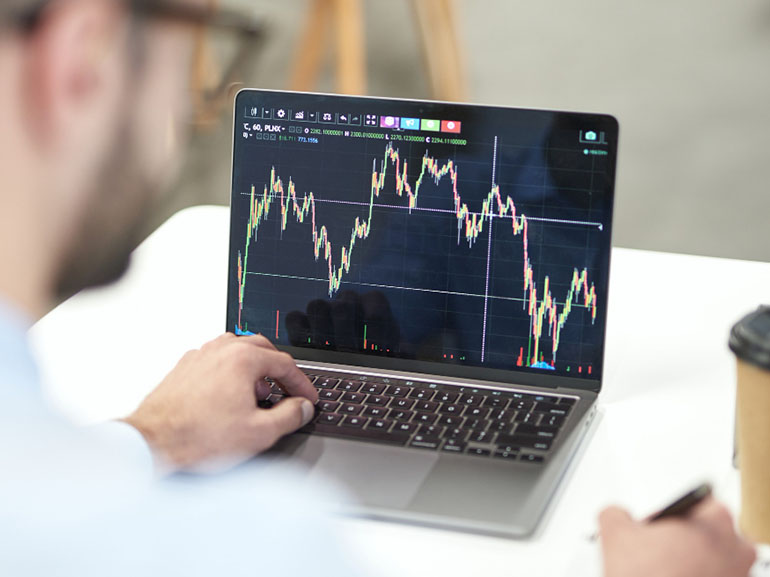
In early Asian trade on Wednesday, oil prices rose on renewed attacks in the Middle East.
Asian stocks dropped after a semiconductor-led sell-off.
Nasdaq futures remained under pressure amid AI chip concerns.
S&P 500 futures were more resilient ahead of key earnings and the Fed decision.
Oil prices trended upward during Wednesday's early Asian session as regional conflicts intensified in the Middle East. This shift follows a brief decline in prices after the U.S. paused nearly two weeks of Iranian-led strikes, which had costly raised hopes for a diplomatic breakthrough.
However, those optimistic expectations dissolved on Tuesday evening after U.S. Central Command (CENTCOM) identified multiple Iranian ballistic missile launches targeting U.S. regional facilities. Even though CENTCOM verified that all missiles were intercepted without causing damage to U.S. installations, the sudden escalation unnerved the market.
In reaction, CENTCOM detailed how joint U.S. and Saudi military forces launched precision strikes against several Iran-backed logistics and weaponry centers in eastern Iraq.
Although these retaliatory maneuvers avoided striking targets directly within Iranian borders, the escalation effectively shattered the brief pause in hostilities, bringing back a risk premium that had started to dissipate.
Additionally reinforcing the upward price action was a sharp drop in U.S. energy inventories. Data released by the American Petroleum Institute showed that domestic crude stockpiles decreased by roughly 3.3 million barrels. At the same time, the Strategic Petroleum Reserve hovered at levels not seen since 1983, overshadowing small gains in gasoline and distillate stocks. (Source: CNBC)
On Wednesday, Asian equity markets experienced steep losses, led by declines in semiconductor stocks. Investors continued to assess concerns over artificial intelligence-related capital spending and increasing competition from Chinese chip technology.
U.S. stock futures were mixed ahead of another busy earnings session. Nasdaq futures remained under pressure on Tuesday as semiconductor shares extended recent declines amid concerns over AI investment returns and heightened competition from China. By contrast, S&P 500 futures showed greater resilience, supported by gains in defensive sectors such as consumer staples and healthcare. Investors are also watching the Federal Reserve's policy meeting, with expectations broadly centred on unchanged interest rates.
Markets remain focused on three key themes: geopolitical developments affecting global energy supplies, the outlook for AI-related technology spending, and upcoming U.S. corporate earnings alongside the Federal Reserve's policy decision. Together, these factors are likely to influence sentiment across commodities, equities and broader financial markets in the coming sessions.
*Past performance does not guarantee future results. The above is for marketing and general informational purposes only, and are only projections and should not be taken as investment research, investment advice or a personal recommendation.
Oil prices rose following renewed US-Iran attacks.
Technology and semiconductor stocks remain under pressure as investors reassess AI spending expectations and growing competition from Chinese chipmakers.
The Fed's latest policy meeting could influence expectations for interest rates and broader market sentiment, even though markets largely expect rates to remain unchanged.





Learn insights through informative videos, webinars, articles, and guides with our comprehensive Trading Academy.
Discover what’s trending in and outside of Plus500.
This information is written by Plus500 Ltd. The information is provided for general purposes only, and does not take into account any personal circumstances or objectives. Before acting on this material, you should consider whether it is suitable for your particular circumstances and, if necessary, seek professional advice. No representation or warranty is given as to the accuracy or completeness of this information. It does not constitute financial, investment or other advice on which you can rely. Any references to past performance, historical returns, future projections, and statistical forecasts are no guarantee of future returns or future performance. Plus500 will not be held responsible for any use that may be made of this information and for any consequences that may result from such use. Hence, any person acting based on this information does so at their own discretion. The information has not been prepared in accordance with legal requirements designed to promote the independence of investment research.
Cryptocurrency CFDs are not available to Retail Clients.