تعادل القوة الشرائية (PPP): دليل تقييم العملات لتجار الفوركس
الخميس 03 محرم 2026
The US dollar rose on Wednesday as traders were looking for safety as the US approaches its debt borrowing limit of $31.4 trillion and could fall into default as soon as June 1. Against its Japanese counterpart (USDJPY), the greenback rose to a 2-week high of 136.69, while against the euro (EURUSD), it crossed under its 50-day simple moving average (SMA) in early trading on Wednesday.
Aside from boosting the US dollar, stress over the debt ceiling drama sent stocks trading lower on Tuesday, prevailing over gains seen in large-cap tech stocks, including Alphabet (GOOG), Amazon (AMZN), Apple (AAPL), and Microsoft (MSFT). Alphabet and Amazon rose more than 2%, Apple saw a mere 0.5% advance, and Microsoft spiked 1% higher by Tuesday’s close. The stalemate to avert a potential US default continued during a Tuesday meeting between US President Joe Biden and House Speaker Kevin McCarthy, leading to no agreement.
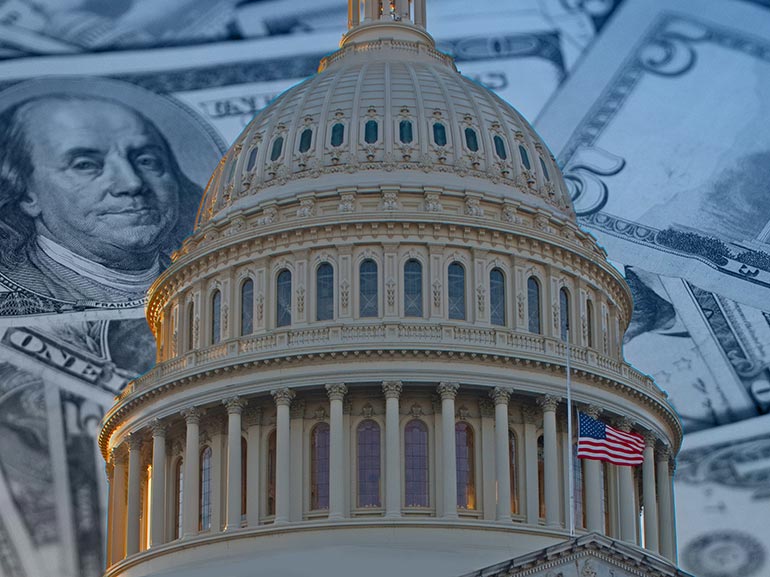
Each year, the US government takes in revenue from taxes and other sources but ends up spending more than it collects. This leaves the government with a budget deficit, which is later added to the total debt for the country.
In order to pay for this deficit, the US Treasury has to borrow money. One way to do this is through Treasury Bonds. The amount of debt the government can issue to pay for services such as Social Security, Medicare, and the military is decided by Congress.
When the maximum limit (a.k.a debt ceiling) set by Congress is met, the government cannot issue more debt, essentially stopping the inflow of money.
With time and money running out, US Treasury Secretary Janet Yellen believes the US is facing an "unprecedented economic and financial storm".
Without raising the debt ceiling, the US could fall into the "unthinkable" prospect of entering a default, which means that the US government cannot pay its debts. Experts say this will cause disruptions for the US and global economies.
Among potential repercussions of hitting the debt ceiling are the downgrading of ratings by credit companies, rising borrowing costs for businesses and homeowners, and a decline in consumer confidence that could tip the economy into recession.
According to Goldman Sachs (GS), hitting the debt ceiling would immediately halt about one-tenth of the US economic activity. The shock waves could ripple to global economies, as the status of the US dollar as the world's reserve currency could be hit by a loss in confidence in the US economy. A precipitous fall in the value of the dollar could particularly affect low-income countries that are already struggling to make interest payments, tipping them into debt crises.
The debt ceiling has routinely been lifted in the past, with the most recent debate as recent as in 2021. For a long time, the debt ceiling was viewed more as a bureaucratic mechanism within the government than a policy change mechanism. But it has become more politicised in later years.
Back in 2011, there was another debt ceiling stalemate between then-President Barack Obama and congressional Republicans, leading to a deal being reached just two days before the government ran out of money.
The meeting between US President Joe Biden and Congressional leaders on Tuesday afternoon announced little progress in reaching a deal. However, one potentially positive development was narrowing the discussion to a smaller group of negotiators.
House Speaker Kevin McCarthy showed optimism in being able to reach an agreement by the end of the week while the White House announced that President Biden would shorten an overseas trip, returning from the 49th G7 meeting starting Friday, May 19, as early as Sunday, for more talks on the burning matter at hand.
US Treasury Secretary Janet Yellen said in a letter to Congress on Monday that the federal government faces a federal default as soon as June 1. However, the deadline was somewhat qualified by the assumption that the Treasury would take some additional measures that "could" extend it by a couple of days. Janet Yellen committed to providing further updates in the weeks ahead. (Source:Investopedia)
Markets tumbled on Tuesday after Congressional leaders and the White House failed to get as far as to agree on raising the US debt ceiling. Both sides reported some progress being made as they faced a June 1 deadline to resolve the issue before the US could fall into default. Congressional leaders and the President are expected to meet again on Sunday, potentially offering some clarity for investors and traders alike.





اكتسب رؤى ثاقبة من خلال مقاطع الفيديو والمقالات والأدلة المفيدة التي توفرها أكاديمية التداول الشاملة.
اكتشف التوجهات السائدة داخل وخارج Plus500.
تم كتابة هذه المعلومات بواسطة Plus500 Ltd. المعلومات مقدمة للأغراض العامة فقط، ولا تأخذ في الاعتبار أي ظروف أو أهداف شخصية. قبل العمل على هذه المادة، يجب أن تفكر فيما إذا كانت مناسبة لظروفك الشخصية، وإذا لزم الأمر، اطلب المشورة المهنية. لا يوجد تعهد أو ضمان لدقة أو اكتمال هذه المعلومات. لا تشكل نصيحة مالية أو استثمارية أو غيرها من النصائح التي يمكنك الاعتماد عليها. أي إشارات إلى الأداء السابق والعوائد التاريخية والتوقعات المستقبلية والتنبؤات الإحصائية ليست ضمانًا للعوائد المستقبلية أو الأداء المستقبلي. لن تكون Plus500 مسؤولة عن أي استخدام قد يتم لهذه المعلومات وعن أي عواقب قد تنجم عن هذا الاستخدام. وبالتالي، فإن أي شخص يتصرف بناءً على هذه المعلومات يفعل ذلك وفقًا لتقديره الخاص. لم يتم إعداد المعلومات وفقًا للمتطلبات القانونية المصممة لتعزيز استقلالية البحث الاستثماري.
عقود الفروقات CFD على العملات الرقمية غير متاحة لعملاء التجزئة.